
Tree Trimming in Baltimore, MD—Pruning Services for Healthier Trees and Safer Yards
Your trees are telling you something. Once spring leafs out in Baltimore, it’s easy to see what wasn’t visible all winter: the dead limb leaning toward the roof, the overgrown crown blocking the gutters, the branches pushing into power lines. What looked fine in February is now a clear problem in May.
Tree trimming and pruning remove that risk before it becomes a repair bill. A-1 Tree & Mulch has been doing this work in Baltimore County since 1988. We hold a
Maryland Licensed Tree Expert certificate (#552), own our equipment outright, and offer free on-site estimates throughout the Baltimore metro area.
Free On-Site Estimate
Call or Text
443-831-1280
Serving Towson,
Cockeysville, Hunt Valley,
Parkville,
Phoenix, Monkton & surrounding areas
When Do Baltimore Trees Need Trimming? The Visual Signs
Spring is the best time to take stock. Trees are fully leafed out and the problems stand out clearly. Here is what homeowners in Baltimore County typically spot this time of year:
- Dead or hanging limbs — brown in the crown while surrounding branches are green
- Limbs within 10 feet of the roofline or rubbing against siding and gutters
- Branches extending over driveways, decks, or high-traffic areas of the yard
- Crown imbalance — the tree looks lopsided or is leaning more noticeably than before
- Suckers or water sprouts shooting from the base or main trunk
- Interior canopy congestion that limits light and airflow
None of these are cosmetic issues. Left alone, they increase the likelihood of branch failure, especially during the summer storms Baltimore County sees between June and September. Trimming now is far less expensive than an emergency removal after something comes down.
The Right Time of Year to Trim (And Why It Matters)
Most trees in Maryland can be trimmed year-round, but timing affects how well they recover and how much stress they endure. General guidelines:
Late Winter
(February–March)
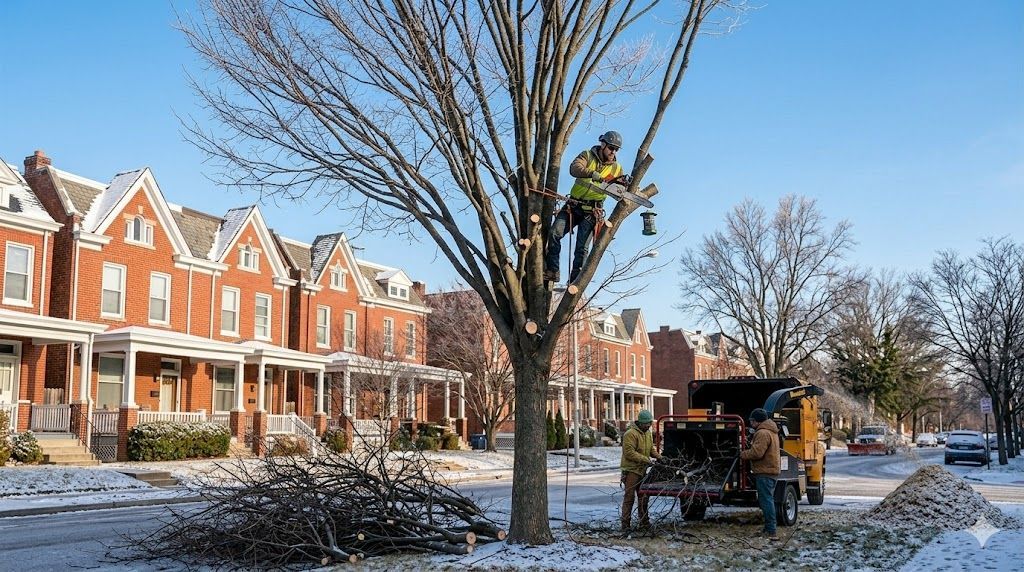
Best time for most species. Trees are dormant, wounds close quickly once growth resumes, and pests and diseases are less active.
Spring
(April–May)
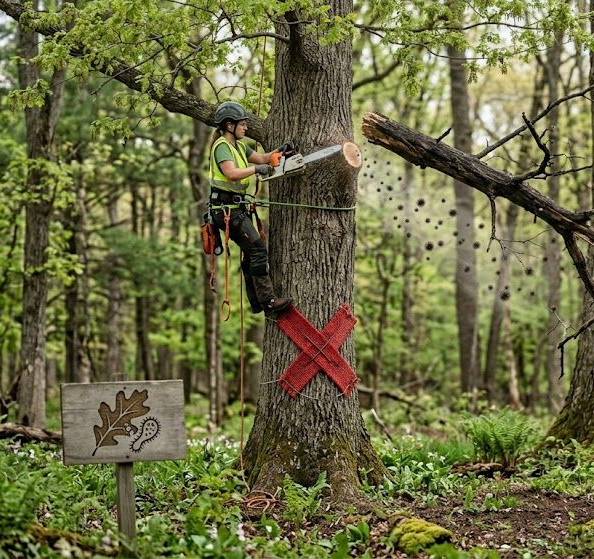
Good for dead and hazard limb removal at any time. Avoid heavy pruning of oaks during April–May to reduce oak wilt risk.
Summer
(June–August)
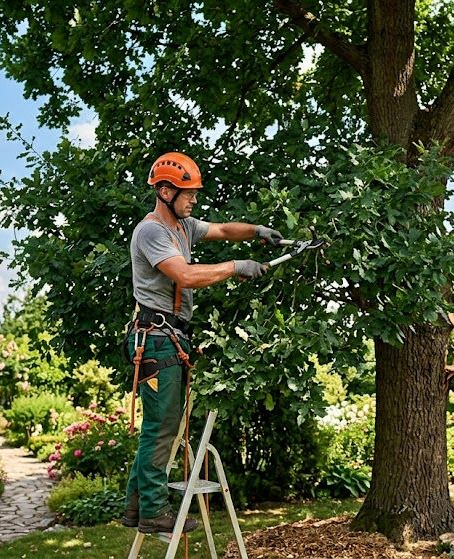
Suitable for corrective trimming and hazard work. Avoid major structural pruning during peak heat — it stresses the tree.
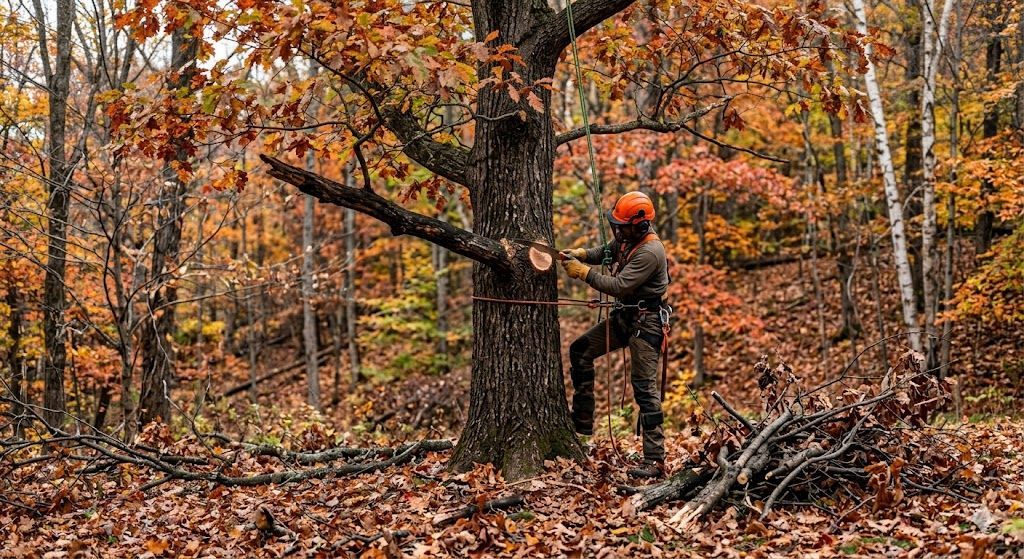
Fall
(September–November)
Remove dead limbs and storm damage as needed. Avoid heavy pruning as growth slows — wounds may not close before winter.
A-1 trims trees throughout the year in Baltimore County. If there is a hazard on your property, the right time to deal with it is when you notice it — not when the calendar says so.
Tree Trimming vs. Pruning: What’s the Difference?
The terms are often used interchangeably, but they describe different goals:
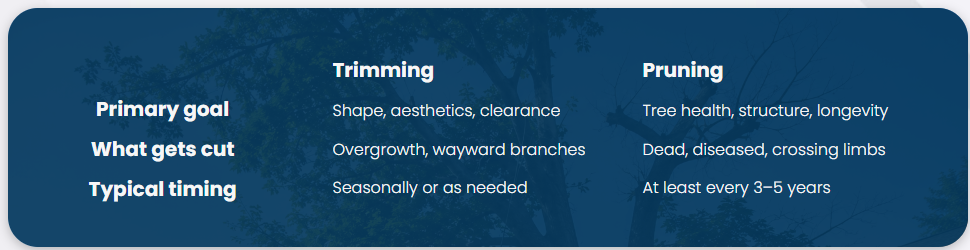
In practice, most residential jobs involve both. A-1 assesses what is in front of us and does what the tree actually needs — not a preset menu of cuts.
Crown Reduction, Deadwood Removal, Canopy Thinning
These are the three most common types of work A-1 performs on trimming jobs in Baltimore County:
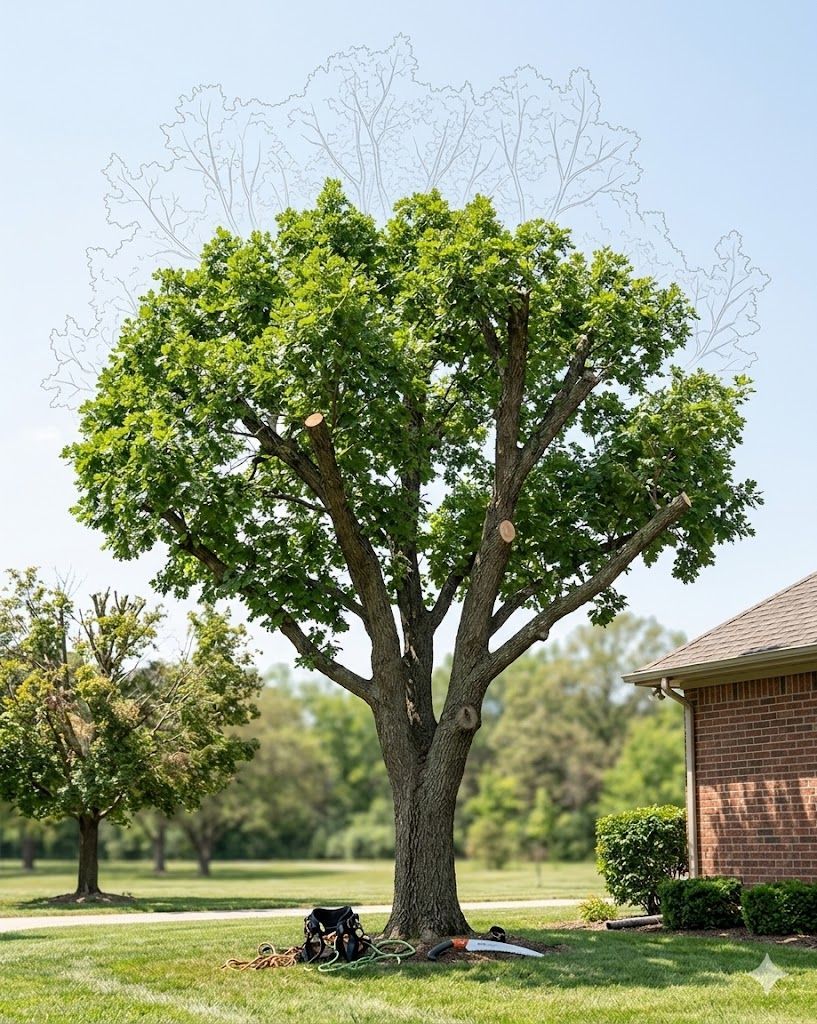
Crown Reduction
Reduces the overall height or spread of the tree by cutting back to lateral branches. Used when a tree has outgrown its space, is crowding a structure, or poses a clearance problem. Done correctly, it preserves the tree’s natural shape. Done poorly, it leads to ugly topping and weak regrowth. A-1 uses proper reduction cuts — never topping.
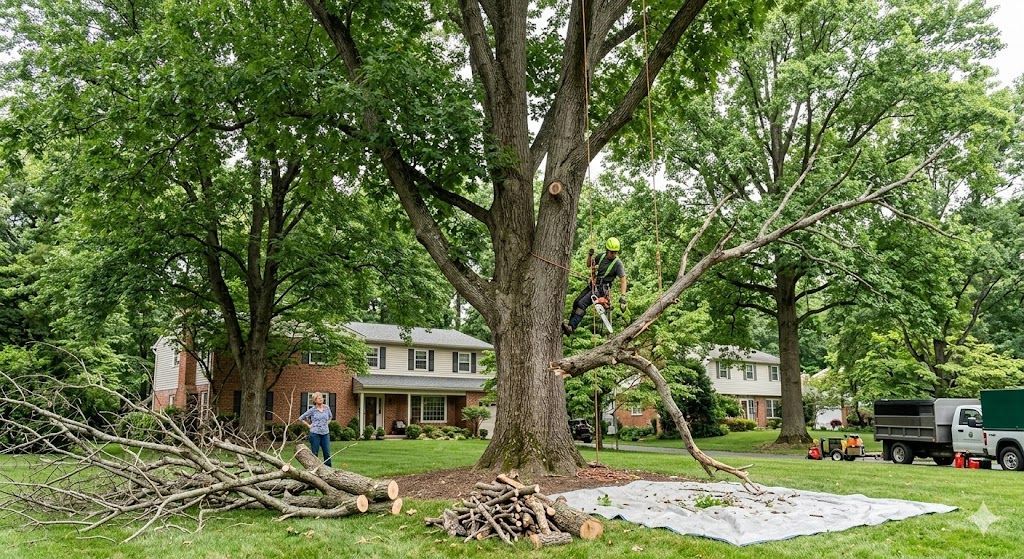
Deadwood Removal
The most straightforward call: dead limbs come down. Dead wood does not heal, does not respond to the tree’s defense systems, and will eventually fall. In Baltimore County, where mature oaks, maples, and tulip poplars are common, deadwood removal is the most frequent reason homeowners call us.
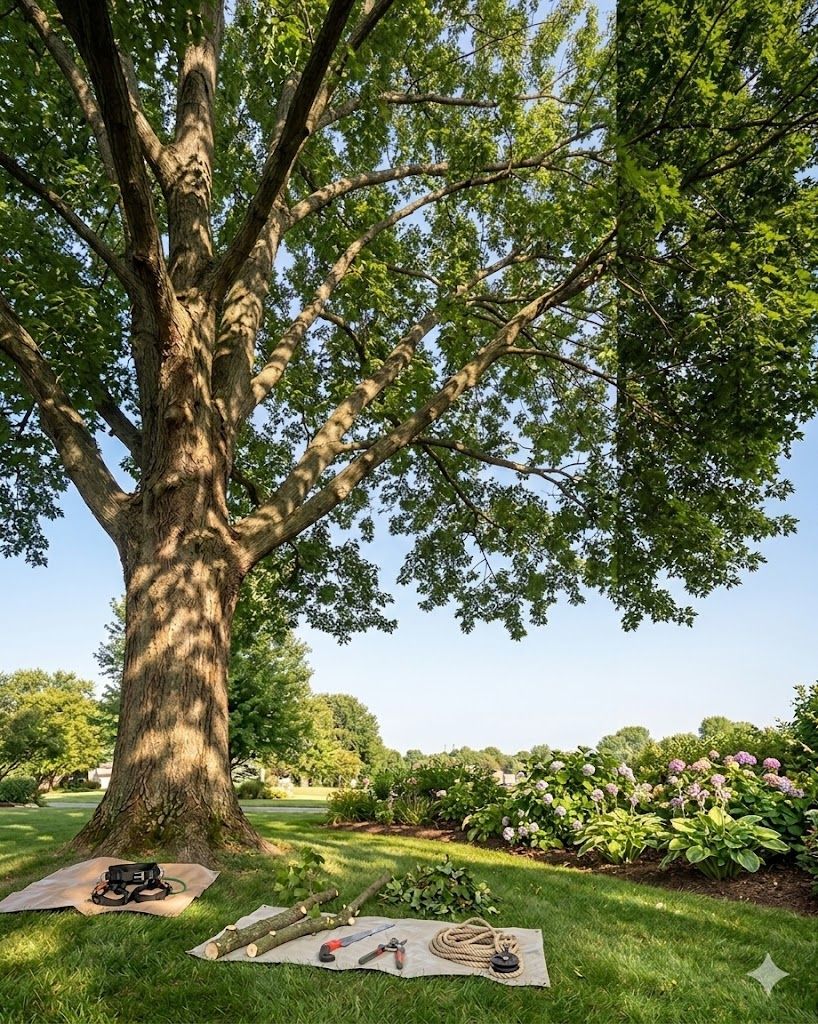
Canopy Thinning
Removes select interior branches to improve light penetration and airflow without reducing the tree’s overall size. Useful for dense-crowned trees where shade is a problem or where poor airflow is contributing to disease. Thinning also reduces wind resistance, which matters in a region that sees regular summer thunderstorms.
Tree Trimming Near Power Lines and Rooflines in Baltimore
Utility line work in Maryland is regulated. BGE’s line-clearance crews handle transmission lines, but the trimming that happens on your property — keeping branches away from the lines running to your house — is your responsibility.
Maryland state law requires a Licensed Tree Expert for all paid tree work.
A-1 Tree & Mulch holds Maryland LTE #552. Not all companies operating in Baltimore County carry this license. If you’re getting quotes, ask to see it.
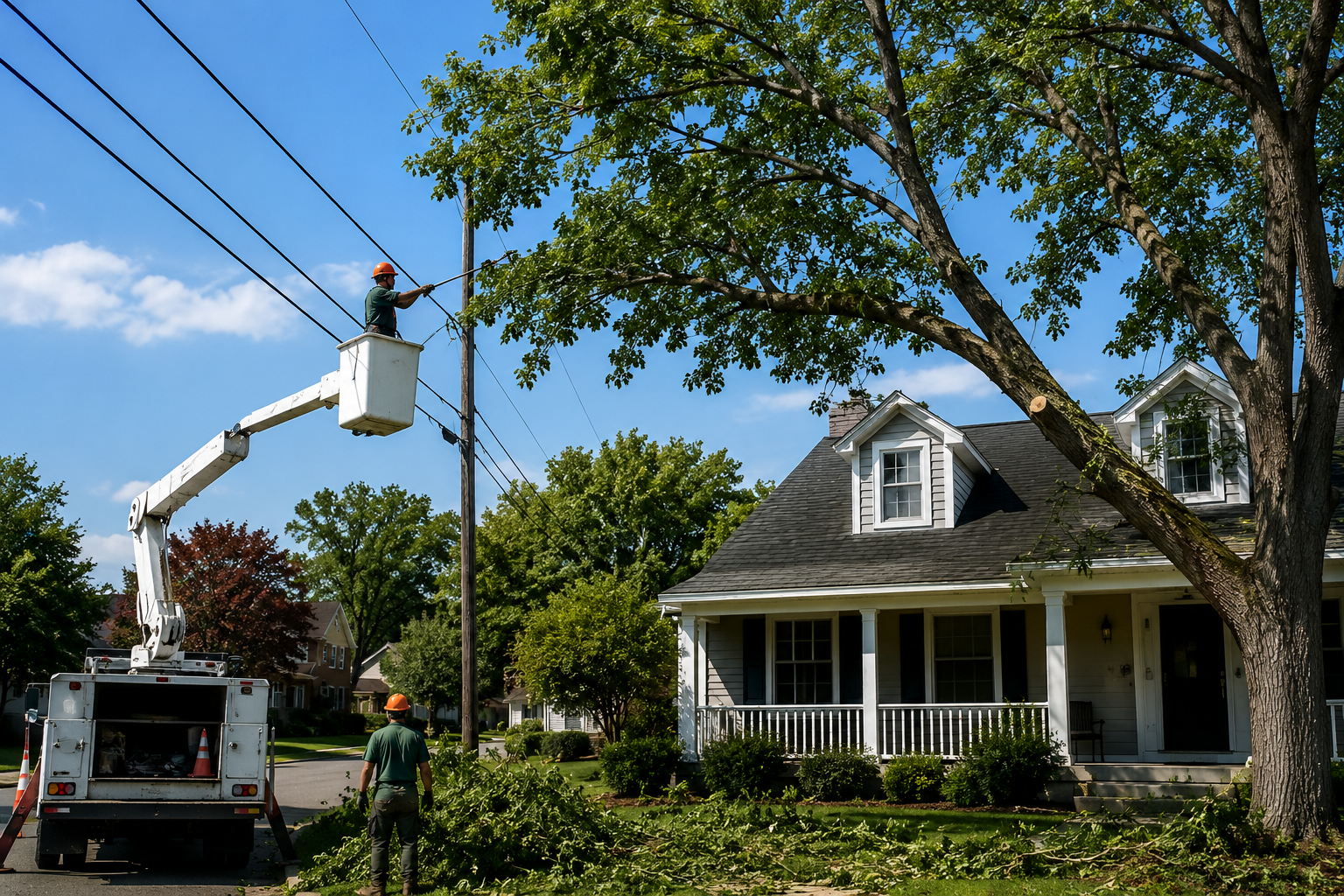
For roofline clearance, A-1 recommends maintaining at least 10 feet of clearance between the nearest branch tips and your roof deck. Branches in contact with the roof accelerate shingle wear, provide a bridge for pests, and hold moisture against the structure. This is a consistent finding on properties we estimate across Towson, Cockeysville, and Hunt Valley.
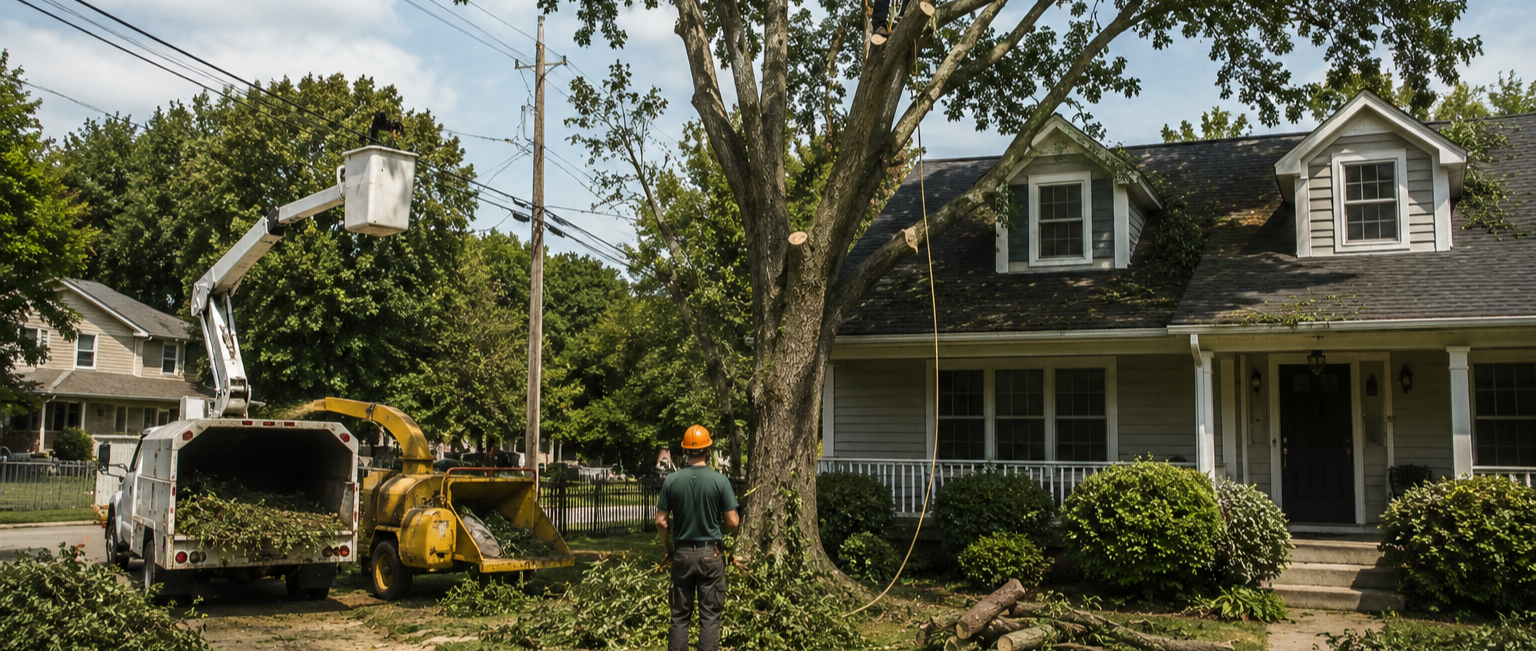
A-1 owns its equipment — crane, bucket truck, chippers — which means we can safely access overhanging limbs that hand-climbing would not reach, without bringing in a rental crew or passing the cost to you.
How A-1 Approaches Every Trimming Job
Every job starts with an on-site walk. Steve or a crew lead looks at the tree, identifies what needs to come out, and explains the approach before any cuts are made. You will not get a quote over the phone and discover the price has changed when the crew arrives.
A-1 has been doing this since 1988 in Baltimore County. That means:
35+ years of experience
with the specific tree species common to this region - willow oaks, red maples, tulip poplars, white oaks, and the silver maples that give Baltimore homeowners the most trouble
BBB A+ rating
and 4.9 stars on Google
Clean-up included
debris is chipped and hauled, not left on your lawn
Maryland Licensed
Tree Expert #552 - the credential Maryland requires for all paid tree work
Owned equipment on
every job
crane and bucket truck included
If a tree needs to come down rather than just be trimmed, A-1 handles that too. The free estimate covers both.
What Affects the Cost of Tree Trimming in Baltimore
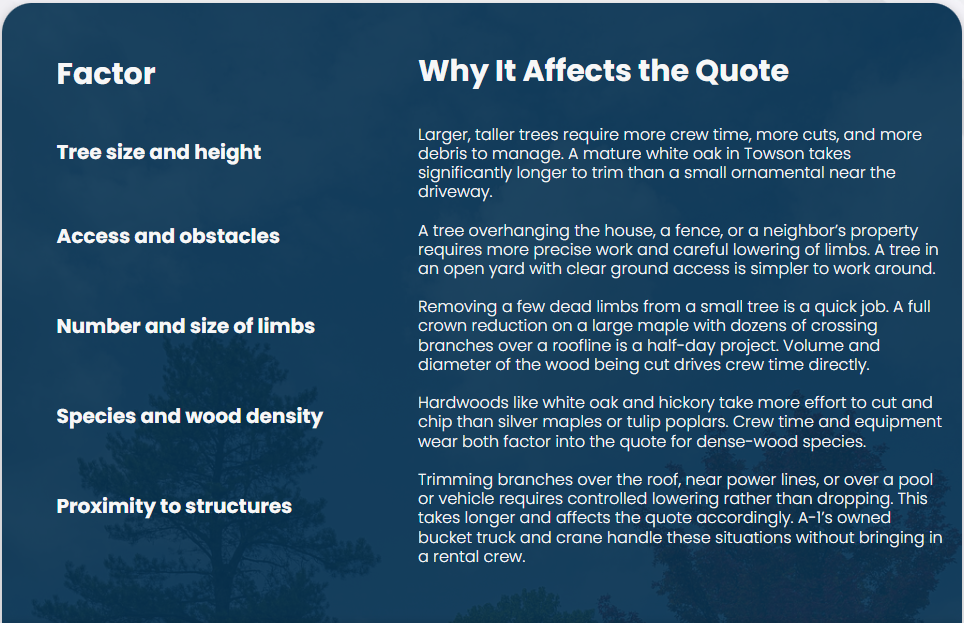
Trimming quotes vary significantly from job to job because no two trees are the same. Here is what actually drives the number — and what to watch out for when comparing estimates.
The only honest way to get a real number is an on-site estimate
not a phone call.
Any company quoting you a firm price without seeing the tree is guessing. A-1 comes to the property, looks at the tree, and gives you a real number. The estimate is free and there is no pressure to book.
Schedule Your Free On-Site Tree Trimming Estimate
Call or text
443-831-1280 —
A-1 Tree & Mulch, Maryland LTE #552, serving Baltimore County since 1988
Frequently Asked Questions
How often should I have my trees trimmed in Baltimore?
A: Most trees benefit from a full assessment every 3–5 years. Fast-growing species like silver maple or Bradford pear may need attention more frequently. Dead limbs and hazard branches should be removed as soon as they are identified, regardless of when the last trim was.
Can you trim trees near power lines?
A: A-1 handles trimming that keeps branches clear of the service line running to your house. BGE manages high-voltage transmission lines directly. If you’re unsure which situation you have, the on-site estimate will sort it out.
Is there a best time of year to call?
A: Late winter through early spring is the prime window for most species. That said, hazard limbs do not wait for perfect timing. A-1 trims year-round in Baltimore County.
Do you handle the debris after trimming?
A: Yes. A-1 chips the material on-site and hauls it away. The same trees we trim often produce the mulch we deliver to other customers — a closed-loop process that has been part of how A-1 operates since the beginning.